
The Triathlon Goggle Fit Problem Nobody Admits: Why Your Swim Split Is Leaking Minutes, Not Just Water
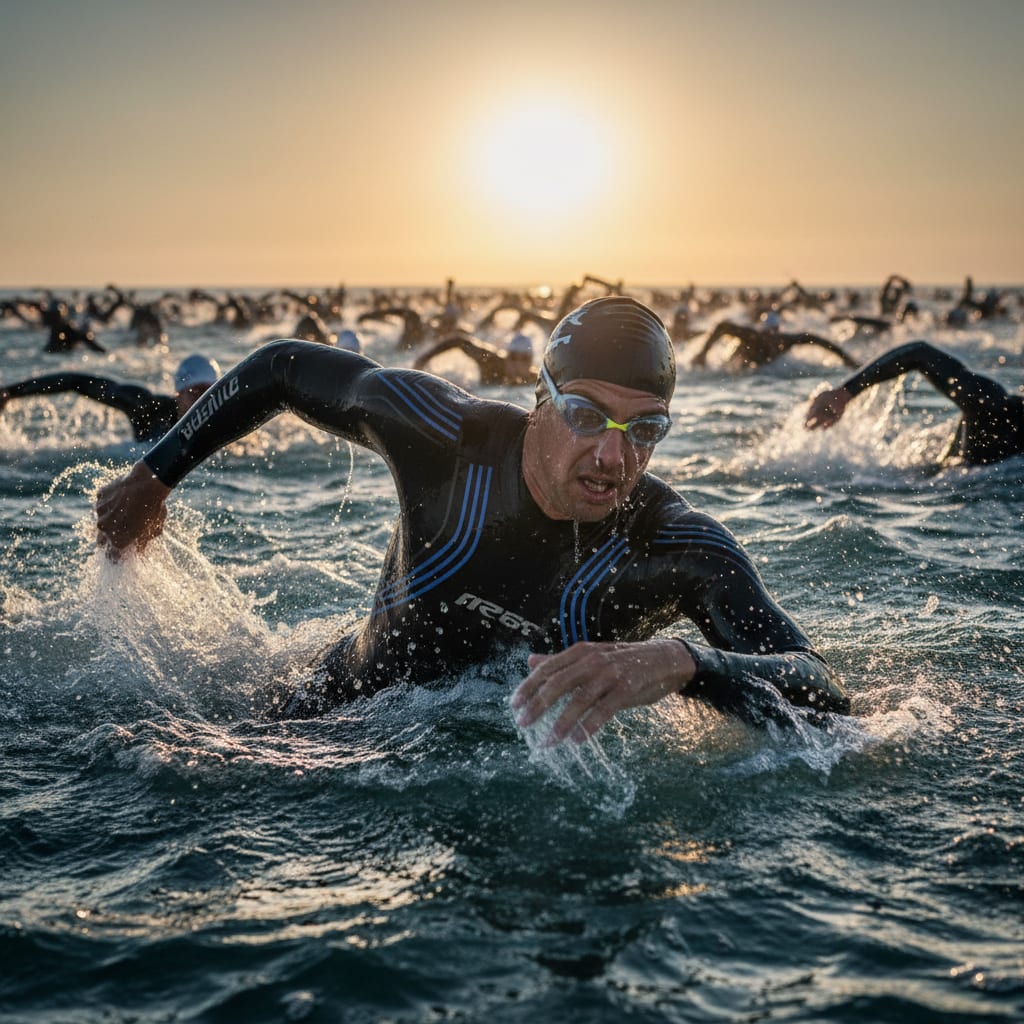
You spent $800 on a wetsuit. You’ve dialed in your stroke rate. You’ve done the open-water sessions. And then you hit the water on race morning, take three strokes into the mass start, and your goggles fill up – or fog up – or shift just enough that every sighting stroke becomes a guessing game.
The goggle is the cheapest piece of swim kit you own. It’s also one of the most performance-critical. And almost nobody tests it the way it deserves to be tested.
Why Do Triathlon Goggles Leak – and Why Does It Actually Matter for Your Split?
Leaking goggles waste time in ways that compound. A single stop to drain and reseat your goggles mid-race costs 10-20 seconds. Do that twice, and you’ve lost more time than most triathletes gain from a $300 wetsuit upgrade.
The root cause is almost never a defective goggle. It’s a fit mismatch. Goggle seals are designed around specific facial geometries – high cheekbones, narrow or wide eye sockets, prominent brow ridges. A goggle that sits perfectly on one face will gap on another, no matter how tight you pull the strap.
The fix isn’t tighter straps. Over-tightening distorts the silicone seal and actually creates leak points at the edges. The fix is finding the right gasket shape for your face before you ever see a race start line.
How Should You Test Goggle Fit Before Race Day?
The only honest test is a pool session, not a bathroom mirror. Press the goggle to your face without the strap and hold it there for five seconds. If it doesn’t create a light suction and stay put briefly on its own, the seal geometry isn’t matching your face – and no amount of strap tension fixes that.
Once the strap is on, test it with intent:
- Dive in repeatedly, not just push off from the wall. Impact from a shallow dive simulates a mass-start knockback better than a gentle entry.
- Wear them for at least 30 minutes continuously. Leaks often develop after the silicone warms and the fit slightly changes.
- Sight aggressively – chin up, eyes forward, the way you’d sight a turn buoy. If the goggle shifts or the frame cuts into your orbital bone, it’ll be worse in chop with fatigue.
- Dunk your head and shake it side to side. Sounds aggressive. Open water is aggressive.
Do this with every new goggle before committing to it for race day.
What Goggle Features Actually Matter for Open-Water Triathlon?
Field of vision and lens tint matter more than most reviews acknowledge – and lens type matters differently outdoors than in the pool.
Field of vision: Wide-angle or panoramic lenses (like those on the Speedo Rift or Aqua Sphere Kayenne) give you more peripheral awareness in a crowded mass start. Standard competition goggles with smaller lenses reduce your peripheral view, which slows sighting and makes navigation harder when bodies are everywhere around you.
Lens tint: Clear lenses work for pre-dawn or indoor races. For open-water racing in daylight, a smoke or blue-tinted lens cuts glare off the water surface. Mirrored lenses (like those on the Roka R1) reduce squinting in direct sun, which reduces the micro-head-movements that disrupt your stroke.
Anti-fog coating: Most goggles ship with a factory anti-fog coating. Touching the inside of the lens destroys it. Once it’s gone, it’s gone – no aftermarket spray fully replaces it.
Low-profile vs. bulky frame: Lower-profile goggles sit closer to the face and are less likely to be knocked off in a mass start. Bulkier frames with more cushion can be more comfortable for longer swims but catch more water resistance and are easier to dislodge.
What About Prescription Goggles for Triathletes?
Prescription goggles are a legitimate option and not a niche one. Brands like Speedo and Aqua Sphere offer corrective lenses in -1.0 to -8.0 diopter ranges, which covers most common prescriptions. You won’t get exact correction – they come in increments – but for open-water sighting, getting close is enough. If you’re racing without contact lenses and trying to navigate with uncorrected vision in chop, you’re losing more time than you think.
—
FAQ
How tight should triathlon goggles be? Tight enough that the seal sits flush with no gaps – not tight enough to leave red marks after 10 minutes. If you have visible goggle marks immediately after removal, you’re over-tightening, which distorts the seal and causes leaking.
Are open-water goggles different from pool goggles? Yes, in practice. Open-water goggles typically prioritize wider field of vision, tinted or mirrored lenses, and more robust seals. Pool goggles are often optimized for low drag and clear vision in controlled light conditions.
How often should triathletes replace their goggles? When the anti-fog coating is gone or the silicone gasket has hardened or cracked. For regular trainers, that’s roughly every 6-12 months depending on use and exposure to chlorine.
Can goggles be worn under a wetsuit hood? Goggles should go on after the wetsuit collar but before a hood, and always outside the cap in open-water racing to allow quick adjustment. Wearing goggles under a swim cap is a personal preference, but it does help prevent dislodging in a mass start.
—
The bottom line: Most triathletes are one pool session of honest testing away from fixing a goggle problem they’ve normalized. Pick goggles that seal on your face without force, suit your race conditions, and give you enough peripheral vision to navigate a real open-water start. Test them hard before race day. Everything else is secondary.

