
The Triathlon Goggle Fit Problem Nobody Warns You About Until You’re Mid-Swim and Blind
The Triathlon Goggle Fit Problem Nobody Warns You About Until You’re Mid-Swim and Blind
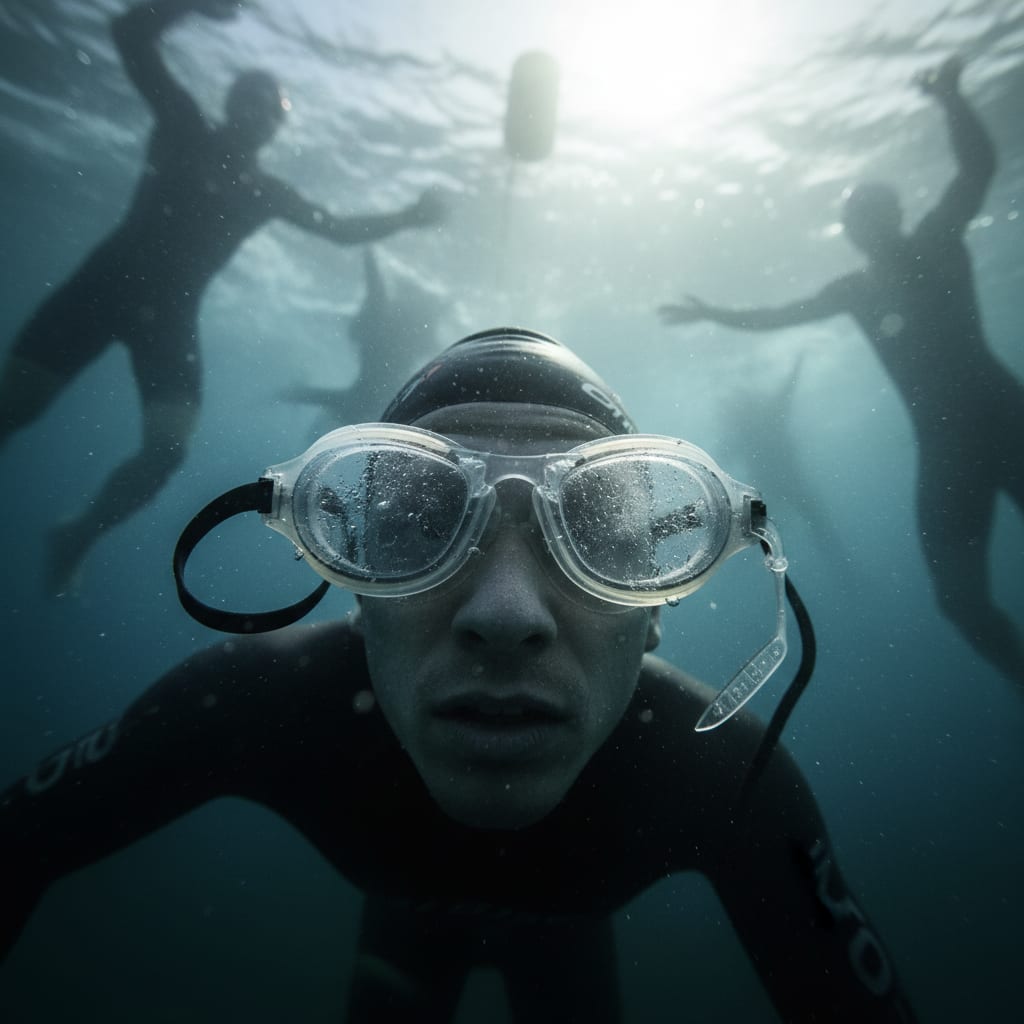
You’ve dialed your wetsuit. You’ve done your open water sessions. You know your swim line. Then the gun goes off, someone’s elbow catches your face in the washing machine chaos, and your goggles shift two millimeters. By the 300-meter mark, you’re half-blind, water is pooling in one eye, and your A-race just became a survival exercise.
Goggle fit is the gear problem nobody talks about until it’s already cost them something.
—
Why Do Triathlon Goggles Fail Differently Than Pool Goggles?
Pool goggles fail when the seal breaks. Open water goggles fail when contact – from waves, other swimmers, or an accidental knock – disrupts a seal that was never as stable as you assumed. The physics are different.
In a pool, your head stays relatively still. You flip, you breathe, and the water pressure is calm and predictable. In open water, especially at the start of a mass-participation race, you’re dealing with turbulence, lateral force, and the genuine possibility of taking a forearm to the face from a swimmer who doesn’t know you’re there.
Pool goggles tend to use softer, more pliable gaskets – great for comfort over a long session, less great for resisting displacement under pressure. Most dedicated open water and triathlon goggles use firmer gaskets and lower-profile frames specifically to resist that lateral movement. The Speedo Fastskin Elite Mirror and the TYR Special Ops 2.0 Polarized are examples of goggles designed with this in mind – wider seal surfaces, stiffer bridge connections, and straps that hold position under impact rather than sliding.
If you’re racing in the same goggles you use for Tuesday morning masters practice, that’s the first thing to change.
—
How Do You Actually Test Goggle Fit Before Race Day?
A goggle that passes the pool test will not always pass the open water test – the only reliable pre-race fit check combines a suction seal test, a strap tension test, and at least one open water swim in race conditions.
Here’s the actual process:
- Suction test first: Press the goggles to your face without the strap on. They should hold for at least 3-4 seconds from suction alone. If they drop immediately, the gasket isn’t seating on your orbital bone correctly – no strap adjustment will fix that geometry problem.
- Strap tension second: Tighten until snug, then shake your head hard left and right. The goggles should move with your skull, not lag. If you feel them sliding, the strap is either too loose or the bridge width doesn’t match your face.
- Wet test third: Swim 200 meters in open water – not a pool – and intentionally take a breath on both sides, accelerate, and change direction. If the seal holds, you’re done. If it doesn’t, you have time to fix it before it matters.
Never debut a new pair of goggles on race morning. New gaskets can behave differently once wet, and you want at least two open water sessions in them before you trust them on a course.
—
Which Lens Tint Actually Matters for Your Race Conditions?
Lens tint affects visibility more than most triathletes realize – the wrong tint in bright morning sun or overcast chop can cut your sighting accuracy significantly. Here’s the practical breakdown:
| Condition | Recommended Tint | Why |
|---|---|---|
| Bright sun, open water | Polarized or mirrored | Cuts glare off the water surface |
| Overcast / low light | Clear or light amber | Maximizes light transmission |
| Early morning race start | Yellow or amber | Enhances contrast in flat light |
| Indoor pool | Clear | No glare reduction needed |
Most triathletes own one pair of goggles and race in whatever conditions come. A better approach: own a clear pair and a polarized pair, and make the call the morning before based on the forecast. Goggles are not expensive relative to what a blown swim split costs you.
—
FAQ
Can I use my regular pool goggles for a triathlon? Technically yes, but they’re optimized for pool conditions – calm water, controlled light, no contact. For open water racing, a goggle with a firmer gasket and a wider seal is worth the switch.
How tight should triathlon goggles be? Snug enough that they don’t shift when you shake your head, but not so tight that you feel pressure on your eye sockets after five minutes. Suction should do most of the work – strap tension is secondary.
Do polarized goggles help in open water triathlon swims? Yes, particularly in bright conditions. Polarized lenses cut the reflected glare off the water surface, which makes spotting buoys significantly easier during sighting.
How often should I replace my goggle gaskets or goggles? Most gaskets degrade noticeably after 6-12 months of regular use – chlorine accelerates breakdown. If you notice the seal softening or cracking, replace them before your next race block.
What’s the best goggle for triathletes who wear glasses? Prescription swim goggles are available from brands like Speedo and Aqua Sphere in standard diopter increments. They won’t match your exact prescription, but they’re close enough to restore functional sighting ability if your uncorrected vision would otherwise compromise your swim.
—
The Takeaway
Goggles get treated like an afterthought – something you grab from the bottom of your kit bag and assume will work because they worked last time. But seal failure, wrong tint, and poor fit under open water conditions are responsible for more blown swims than most athletes want to admit.
Do the suction test. Get at least two open water swims in your race-day pair. Keep a clear and a polarized option in rotation. It’s a $40-80 decision that can protect months of training.

