
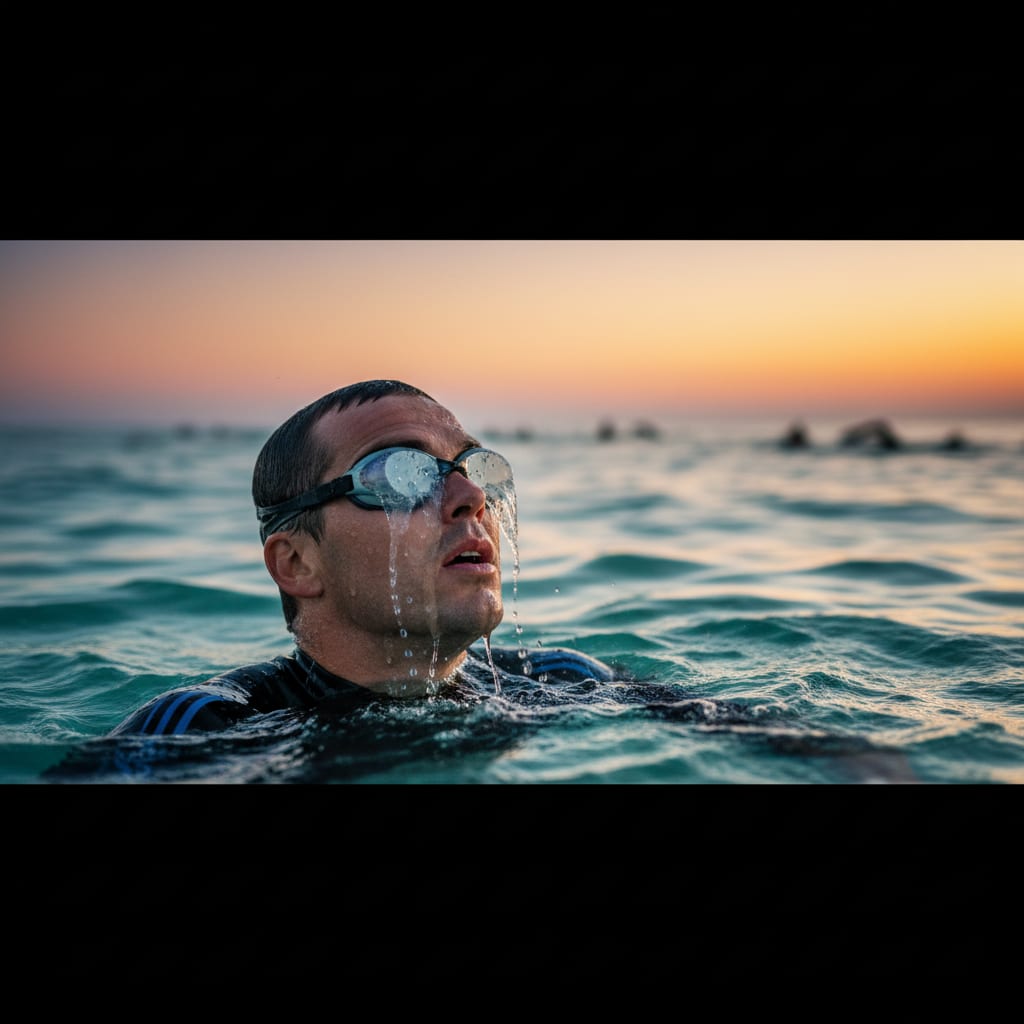
The Triathlon Goggle Fit Problem Nobody Warns You About Until You’re Sighting Blind at 400 Meters
The Triathlon Goggle Fit Problem Nobody Warns You About Until You’re Sighting Blind at 400 Meters
You’ve done the pool sessions. You’ve got your sighting drill dialed. You show up on race morning, pull on your goggles, wade into the water – and 400 meters in, both lenses are flooding, you can’t see the turn buoy, and you’re navigating by sound and optimism.
This isn’t a skill problem. It’s a fit problem. And it happens to triathletes at every level, from first sprint to Ironman, because most people pick goggles the same way they pick sunglasses – by how they look on the rack, not how they seal in choppy, open water.
Here’s what actually matters.
—
Why Does Open-Water Goggle Fit Fail When Pool Fit Feels Fine?
Open-water swimming puts entirely different mechanical stress on a goggle seal than pool swimming does. In a pool, you’re moving in controlled, calm water with minimal face movement between strokes. In open water, you’re sighting every 6-10 strokes, lifting your head at irregular angles, getting splashed from the side, and sometimes taking a kick to the face from the athlete ahead of you.
Each head lift during sighting breaks the pressure equilibrium that holds a goggle seal in place. If the gasket isn’t conforming tightly to your specific facial geometry – particularly around the nose bridge and lower orbital bone – water finds its way in fast. A goggle that stays dry for 2,000 meters in a lane may flood within 200 meters of open-water racing.
The fix isn’t a tighter strap. It’s matching gasket shape to your face structure from the start.
—
What Actually Creates a Reliable Open-Water Seal?
A good open-water goggle seal depends on three things: gasket material, gasket depth, and nose bridge width – in that order.
Gasket material: Silicone gaskets conform better to facial contours than hard plastic frames. Thicker, softer silicone – like the gaskets found on the Speedo Fastskin Elite Mirror or the Aqua Sphere Kayenne – creates more surface contact across irregular bone structure. Thin silicone is more prone to fold-over under strap tension, which creates leak channels.
Gasket depth: Deeper cup-style gaskets (think Aqua Sphere or TYR Tracer-X) sit around the orbital socket rather than against it, distributing pressure more evenly. Flat-gasket designs work well in pools but tend to lose their seal the moment your face angle changes.
Nose bridge width: This is the most underrated factor. A nose bridge that’s 2-3mm too wide will shift the entire goggle laterally under strap tension, breaking the seal on one side consistently. Most major brands offer nose bridge kits – Speedo’s Swedish-style goggles, for instance, come with three bridge sizes. Use them. Don’t assume medium fits because it usually does.
—
How Does Field of Vision Affect Open-Water Sighting?
A wider field of vision isn’t just comfortable – it directly reduces the time your head spends out of the water on each sighting stroke, which means less drag and less disruption to your seal. A narrow lens forces you to lift higher and hold longer to locate a buoy. That extra second per sighting stroke adds up over a 1,500-meter swim.
For open-water racing, look for goggles with a lens angle of at least 180 degrees peripheral view. The Aqua Sphere Vista (used by numerous age-group and elite triathletes in Ironman events) offers one of the widest fields available. The tradeoff is slightly more bulk – which is worth it in a race where missing a buoy can add 100+ meters to your swim leg.
For training in open water, a standard triathlon goggle with polarized or mirror lens works fine. Reserve your widest-view goggles for race day.
—
Race-Day Lens Tint: What Color for What Conditions?
Lens tint is the last decision to make, not the first – but it does matter. Clear or light tint lenses work best in overcast or early-morning low-light conditions, common at many race starts. Smoke or dark mirror lenses handle bright sun and glare off the water. Amber or yellow lenses enhance contrast in murky or choppy water, making buoys easier to pick out.
Check the race start time and the typical weather conditions for your event. A 7 AM lake swim in autumn fog calls for a clear lens. A noon ocean swim in Florida needs a dark mirror. Having two pairs – one clear, one dark – is a practical investment if you race more than twice a season.
—
FAQ
How tight should triathlon goggles be? Tight enough to create a seal without strap tension doing all the work. If you press the goggles gently against your face and they hold suction for 3-5 seconds without the strap, the fit is right. If they need a very tight strap to stay sealed, the gasket shape isn’t matching your face.
Can I use the same goggles for pool training and open-water racing? You can, but it’s not ideal. Pool goggles are typically lower-profile with thinner gaskets. Open-water conditions favor deeper cup gaskets and wider lenses. If you train exclusively in a pool but race in open water, test your race-day goggles in open water at least twice before the event.
What goggles do most competitive triathletes use? Aqua Sphere (particularly the Kayenne and Vista models), Speedo Fastskin, and TYR Tracer-X appear consistently in age-group and competitive fields. Fit varies by individual – no single model works for every face shape.
Do anti-fog coatings actually hold up in open water? Coatings degrade over time and with contact – touching the lens interior accelerates this. Apply a thin layer of anti-fog spray (like Sea Buff or Speedo’s anti-fog solution) the night before a race. Avoid rinsing the inside of the lens after each session.
How do I know if my nose bridge is the right width? The nose bridge should sit flat across your nose with no gap and no compression that tilts the lenses inward. If the goggle frame rotates toward your nose under strap tension, the bridge is too wide. If you see daylight under the gasket at the nose corners, it’s too narrow.
—
The Bottom Line
Most goggle problems in open water trace back to fit decisions made in a shop or while scrolling product pages – not to the water itself. Get the gasket material and nose bridge right first, then worry about lens tint. Test your race-day pair in open water before your event, not in a warm pool the week before.
Your goggles should be the piece of kit you forget about entirely once the swim starts. If you’re thinking about them at 400 meters, something’s wrong – and it’s almost certainly the fit.
