
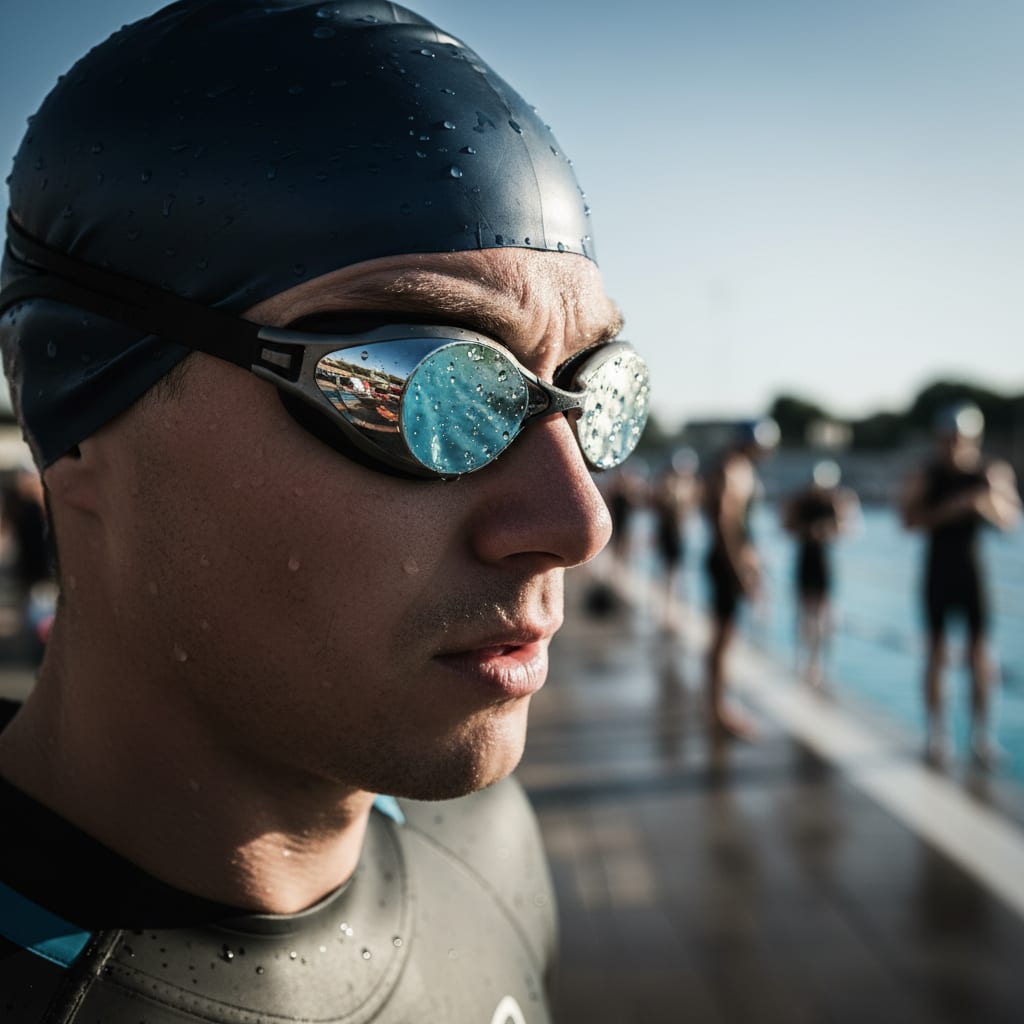
The Triathlon Goggle Fit Problem: Why Most Athletes Are Racing Half-Blind and Don’t Know It
The Triathlon Goggle Fit Problem: Why Most Athletes Are Racing Half-Blind and Don’t Know It
You’ve spent months dialing in your triathlon bike fit, tested three different running shoes, and agonized over wetsuit thickness. Then race morning arrives, you pull on the same goggles you’ve been using for Tuesday lane swims, and 400 meters into open water you’re fighting a slow leak, sighting directly into the sun, and wondering why your left eye already stings.
This is the goggle problem. And almost nobody talks about it.
—
Why Does Goggle Fit Matter More in Open Water Than in the Pool?
A poor goggle seal in a pool is an inconvenience. In open water, it’s a performance killer – and a safety issue. In the pool, you stop at the wall. In a race, you don’t get that option at mile 0.5 when 300 other athletes are churning the water around you.
Open-water swimming introduces three things your pool session never does: wave chop that presses and pulls at your seal with every stroke, contact from other swimmers that can knock a frame out of position, and the constant need to sight – lifting your head against water pressure that wants to push the goggle away from your face.
A goggle that leaks 10% of the time in the pool will leak 60% of the time in a race start. That’s not a stat from a lab; that’s what you’ll find if you start tracking it honestly.
—
How Do You Know If Your Goggles Actually Fit Your Face?
The right goggle fit creates a seal using suction from the lens cup alone – no strap pressure required. Press the goggles against your eye sockets without using the strap and gently shake your head. If they hold for two seconds, the fit is solid. If they drop straight off, the cup shape doesn’t match your orbital bone structure, and no amount of strap tightening will fix that.
Face shape matters significantly here:
- Narrow faces typically suit low-profile goggles like the Speedo Fastskin Pure Focus or the Arena Cobra Ultra, which have a smaller cup diameter
- Wider or flatter faces often get a better seal from goggle designs like the TYR Special Ops 2.0 or Aqua Sphere Kayenne, which use a softer gasket and wider bridge
- Deeper-set eyes generally pair well with larger cup volume designs like the Aqua Sphere Vista or Seal 2.0
The bridge adjustment is equally critical. Most goggles ship with a fixed or limited-adjustment bridge. If the inner corners of your eyes show red pressure marks after 20 minutes, your bridge is too narrow and the strap is compensating – which means water ingress is coming.
—
Which Lens Tint Should You Choose for Open-Water Racing?
Lens tint choice depends on your race start time, the direction you’ll be sighting, and typical weather conditions at your race venue – not personal preference. Getting this wrong means sighting into a glare wall or losing depth perception in dark water.
A practical breakdown:
| Condition | Recommended Tint | Example Lens |
|---|---|---|
| Bright sun, morning start | Smoke or polarized | Speedo Fastskin smoke lens |
| Overcast / variable | Blue mirror or amber | Aqua Sphere titanium mirror |
| Low light / dawn start | Clear or yellow | TYR Special Ops yellow |
| High glare on flat water | Polarized | Roka R1 polarized |
Polarized lenses deserve specific attention for triathletes. They reduce surface glare significantly during sighting, but some athletes find them disorienting in choppy water where reading surface movement helps navigation. Test them in open water before committing to race day.
—
What Should You Test Before Race Day?
Do at least two open-water sessions in your race goggles, not just pool swims. The differences in pressure, water temperature, and head position will surface fit issues that 20 pool laps never will.
Run this checklist four weeks out from your race:
1. Perform the suction test on dry skin before every session 2. Swim at race-pace effort – leaks often appear only when breathing hard and head position changes 3. Practice sighting 6-8 times per 100 meters to check if the lens distorts your horizon line 4. Check for fogging after 15 minutes of swimming; anti-fog coating on budget goggles degrades quickly 5. Test in the same time of day as your race start
—
FAQ: Triathlon Goggles
Can I use pool goggles for open-water triathlon racing? You can, but many pool goggles have thinner gaskets designed for still, temperature-controlled water. Open-water racing benefits from a wider, softer seal and a lens with UV protection – features most training goggles skip.
How tight should goggle straps be? Tight enough that the goggle doesn’t shift when you shake your head, loose enough that removing them leaves no visible mark after 30 seconds. If you’re relying on strap tension to maintain the seal, the cup fit is wrong.
Are mirrored lenses worth it for triathlons? Yes, in bright conditions. Mirrored lenses reduce glare better than tinted lenses alone, and they also prevent other athletes from seeing where you’re looking – a minor tactical advantage in competitive waves.
How often should I replace my goggles? Replace the gasket or the goggles entirely when the seal becomes inconsistent, or when anti-fog coating stops working – typically after 6-12 months of regular training use. Don’t wait until race week to discover this.
What’s the most common goggle mistake triathletes make? Never testing goggles in open water before race day. The second most common: overtightening the strap to compensate for a poor cup fit, which causes pressure headaches mid-race and still doesn’t solve the leak.
—
The bottom line: goggles are the cheapest performance item in your triathlon gear bag and the most neglected. A $40 pair that seals perfectly to your face beats a $120 pair that leaks every time. Test the fit before you buy, test it in open water before you race, and pick your lens tint based on actual race conditions – not what came in the box.

